

Danish Butter Cookies have a delicate buttery flavor with vanilla extract and vanilla bean paste in every bite. They're a lovely addition to my Holiday Cookies collection, with piped swirls and a little sparkling sugar. I'll walk you through mixing the dough, piping the cookies, and baking them. You'll also see how two different piping tips change the finished cookies so you can choose the look you like.

I like to keep decorating simple, and a sprinkle of sparkling sugar adds a little shine to these buttery swirls. They look right at home on a holiday cookie tray alongside my Italian Anise Cookies and Hazelnut Espresso Shortbread Cookies. Each brings a different flavor to share with family and friends.
A Quick Look: Danish Butter Cookies
- Flavor: Buttery vanilla, with both vanilla extract and vanilla bean paste.
- Shape: Piped swirls finished with sparkling sugar.
- Chill time: Fifteen minutes after piping to help the cookies hold their shape.
- Bake: 350°F (175°C or 180°C) for eleven to thirteen minutes.
- Helpful equipment: A sturdy piping bag and a large star tip. See Choosing a Piping Tip below to compare the results.
Why You'll Love These Cookies
- 🧈 Butter and vanilla flavor: Vanilla extract and vanilla bean paste complement the buttery dough.
- 🌟 Two piping styles to choose from: The photos show how each tip changes the ridges and shape of the finished cookies.
- ✨ Simple decorating: A sprinkle of sparkling sugar adds a little shine without icing.
- ⏱️ A short chill: The piped cookies need just fifteen minutes in the refrigerator before baking.
Choosing a Piping Tip

This Ateco 826 open star tip creates wide ridges in the cookies. Use a sturdy piping bag, since cookie dough takes more pressure to pipe than frosting. I use an Ateco medium coupler to hold the tip in place.

Here are the baked cookies piped with the Ateco 826. The wider ridges give the swirls definition and leave plenty of room for sparkling sugar.

This Ateco 869 French star tip has more teeth than the Ateco 826, creating finer, closer ridges. I use an Ateco coupler to hold this tip in place.
Here are the baked cookies piped with the Ateco 869. I used white sparkling sugar so you can see the finer ridges, but when the light catches the cookies, they sparkle.
I found the Ateco 826 easier to pipe with this dough. The Ateco 869 takes a little more pressure, so a sturdy piping bag is especially helpful.
Ingredients for Butter Cookies

Key Ingredient Notes
- Unsalted butter: Use room-temperature butter so it mixes smoothly with the powdered sugar.
- Powdered sugar: Sift it over the butter to remove lumps before mixing.
- Vanilla extract and vanilla bean paste: I use both for the vanilla flavor in these butter cookies.
- Sparkling sugar: Sprinkle it onto the piped cookies before chilling. Choose white for a subtle sparkle or colored sugar for a festive finish.
See the recipe card for full information on ingredients and quantities.
How to Make Danish Butter Cookies
With so few ingredients, the butter and vanilla really stand out in these cookies. Choose a butter you enjoy the taste of and good-quality vanilla extract and vanilla bean paste.
Prep
Step 1: Weigh or measure the powdered sugar into a bowl and set it aside.
Step 2: In another bowl, weigh or measure the flour. Add the kosher salt and whisk to blend.
Mix the Dough

Step 3: Cube the room-temperature butter into your mixer bowl.

Step 4: Sift the powdered sugar directly over the butter to remove any lumps before mixing.

Step 5: Start the mixer on low speed to combine the butter and powdered sugar. Once incorporated, increase to medium speed and mix for 3 minutes, until light and fluffy.

Step 6: Add the egg, vanilla extract, and vanilla bean paste. Mix on medium speed for 1 minute to combine.

Step 7: The mixture may look separated after adding the egg, but it will come together as you add the flour. With the mixer on low speed, add the flour mixture about a third at a time, mixing just until incorporated.

Step 8: Use a spatula to check that all the flour is mixed into the dough, then transfer it to a microwave-safe bowl.
Pipe and Bake
Step 9: Fit a sturdy piping bag with your chosen star tip. You can use a coupler, as shown in the photo, or slide the tip directly into the bag before trimming the end. A little dough will remain inside the coupler when you finish piping.

Step 10: Preheat the oven to 350°F (175°C or 180°C). Line 2 cookie sheet pans with parchment paper or silicone mats. If using parchment, weigh down an edge while piping the first few cookies so the paper does not lift with the tip. Remove the weight before baking.
Step 11: Microwave the dough in its microwave-safe bowl for 8-10 seconds to soften it slightly for piping. Do not heat for more than 10 seconds. You want the dough softer, without melting the butter or causing it to separate.

Step 12: Fill the piping bag with about half the dough. Squeeze from the top of the bag to push the dough toward the tip until a little begins to come through.
Step 13: Pipe each cookie in a circle, finishing in the center to form a rosette. The swirls do not have to be perfect. Mine have a homemade look, and the flavor is what matters most.

Step 14: Sprinkle sparkling sugar over the piped cookies. Refrigerate the pan for 15 minutes to firm the butter and help the cookies hold their shape. Refill the piping bag with the remaining dough and repeat for the second pan.
Step 15: Bake for 11-13 minutes, checking after 11 minutes. Look for light golden browning around the bottom edges. Remove the pan from the oven and transfer the cookies to a cooling rack.

Enjoy!
Storage & Freezing
🫙🍪 Storage
Let the cookies cool completely, then store them in a container with a tight-fitting lid at room temperature for 5-8 days.
❄️ Freezing
Freeze the cooled, baked cookies in a freezer-safe container, with parchment paper between layers, for up to 2 months. Thaw in the closed container at room temperature.
Sparkling sugar may lose some shine after thawing, and colored sugar may bleed if moisture collects on the cookies.
A note about freezing: I don't typically freeze my cookies or cookie dough, so the freezing information provided here has not been personally tested in my kitchen.
Looking for substitutions or freezing tips? Choose an option below for additional guidance.
FAQs
Yes, both names refer to the same type of cookie. "Cookies" is the term commonly used in the United States, while "biscuits" is used in places such as the United Kingdom.
Use unsalted butter that you enjoy the taste of, since its flavor stands out in these cookies. European-style butter is an option, but you do not need it to make this recipe.
Replace the ½ teaspoon of vanilla bean paste with an additional ½ teaspoon of vanilla extract, for a total of 1½ teaspoons of extract. You'll still have vanilla flavor, just without the little vanilla bean specks.
Other Buttery Cookies


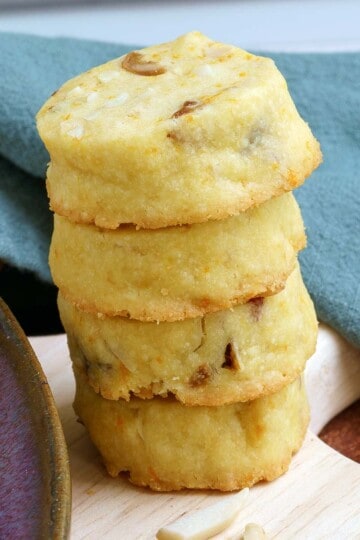
If you tried this Danish Butter Cookies recipe or any other recipe on my blog, please leave a ⭐ star rating and share your thoughts in the comments. Thanks!
Recipe

Danish Butter Cookies
Ingredients
- 1 cup (227 g) Butter unsalted room temperature
- ¾ cup (90 g) Powdered sugar
- 1 Egg
- 1 teaspoon Vanilla extract
- ½ teaspoon Vanilla bean paste
- 2 cups (250 g) All-purpose flour
- ¼ teaspoon Kosher salt
- 2 Tablespoons Sparkling sugar
Would you like to save this recipe?
Instructions
- Weigh or measure the powdered sugar into a small bowl and set it aside. In another bowl, weigh or measure the flour, add the kosher salt, and whisk to blend.
- Add the room-temperature butter to your mixer bowl and sift the powdered sugar over it. Mix on low speed until combined, then increase to medium speed and mix for 3 minutes, until light and fluffy.
- Scrape down the bowl. Add the egg, vanilla extract, and vanilla bean paste, then mix on medium speed for 1 minute. With the mixer on low, add the flour mixture about a third at a time, mixing just until incorporated. Use a spatula to check for any remaining flour, then transfer the dough to a microwave-safe bowl.
- Line 2 cookie sheet pans with parchment paper or silicone mats. If using parchment paper, weigh down an edge while piping the first few rosettes so the paper does not lift with the tip. Remove the weight before baking.
- Fit a sturdy piping bag with a large star tip. Microwave the dough for 8-10 seconds to soften it slightly for piping. Do not heat for more than 10 seconds or let the butter melt.
- Fill the piping bag with half the dough. Pipe each cookie in a circle, finishing in the center to form a rosette. Sprinkle with sparkling sugar, then refrigerate the pan for 15 minutes to help the cookies hold their shape. Repeat with the remaining dough for the second pan.
- Preheat the oven to 350°F (175°C or 180°C). Bake each pan for 11-13 minutes, checking after 11 minutes. The cookies are ready when the bottom edges are lightly golden. Remove the pan from the oven and transfer the cookies to a cooling rack.
Share this recipe
Recipe Notes
- Vanilla substitution: If you don't have vanilla bean paste, use an additional ½ teaspoon of vanilla extract, for a total of 1½ teaspoons.
- Piping tips: The Ateco 826 creates wider ridges and takes less pressure to pipe. The Ateco 869 French star tip creates finer, closer ridges. Use a sturdy piping bag with either tip.
- Yield: Cookie size and your chosen piping tip can affect the yield. This recipe makes about 21 cookies.
NUTRITION DISCLAIMER
I am not a certified Dietitian or Nutritionist. The nutrition amounts given below are provided through a program and are only a guideline.

Join the Discussion